 How-to
How Can Couples Counseling Help Communication Issues?
Last Updated: October 25, 2026
Quick Summary
Couples counseling communication helps partners understand each other's perspective and develop healthier ways to interact by creating a safe space where both people can express themselves without judgment and learn new patterns together. A licensed therapist teaches concrete skills like active listening, identifying conflict triggers, and building empathy so couples can resolve disagreements more constructively.
- Active listening and reflective techniques help partners feel genuinely heard and reduce misunderstandings about each other's actual concerns.
- Structured exercises like speaker-listener exchanges and I statements shift focus from blame to vulnerability, which typically softens defensiveness.
- Couples often notice progress in stages: early sessions reduce argument damage, middle stages bring earlier concern-raising, and later stages make new patterns more automatic.
- Pausing heated conversations for twenty to thirty minutes prevents damage and allows partners to return when calmer for better outcomes.
- Progress is measured not by absence of conflict but by a shorter, less damaging path back to connection after disagreement.
Table of Contents
- Understanding Communication Breakdown in Relationships
- How Couples Counseling Addresses Communication Problems
- Couples Therapy Communication Exercises and Techniques
- How to Communicate With Your Partner Without Fighting
- Using Communication Scripts for Couples
- How Long Does Couples Counseling Take
- Starting Your Counseling Journey
- Frequently Asked Questions
Understanding Communication Breakdown in Relationships
When couples repeat the same arguments or feel unheard, a breakdown in couples counseling communication is usually at the root. Many relationships struggle not because partners don't care, but because they lack effective ways to express needs, listen without defensiveness, or work through conflict.
Communication problems often develop gradually. One partner stops sharing vulnerable feelings; the other withdraws when conversations turn tense. Over time resentment builds, small disagreements escalate, and a misunderstanding becomes a recurring pattern that feels impossible to break.
At Oak Lawn Counselors, we work with couples who recognize these patterns and want to change them.
Here's what commonly happens in relationships with communication issues:
- One or both partners avoid difficult conversations
- Defensiveness replaces curiosity about the other's perspective
- Partners talk past each other instead of truly listening
- Unresolved conflicts accumulate and trigger bigger arguments
- Emotional distance grows as connection fades
The American Psychological Association's research on relationship communication shows that how couples handle disagreement is one of the strongest predictors of relationship satisfaction. This is where couples counseling for communication issues can make a real difference.
How Couples Counseling Addresses Communication Problems
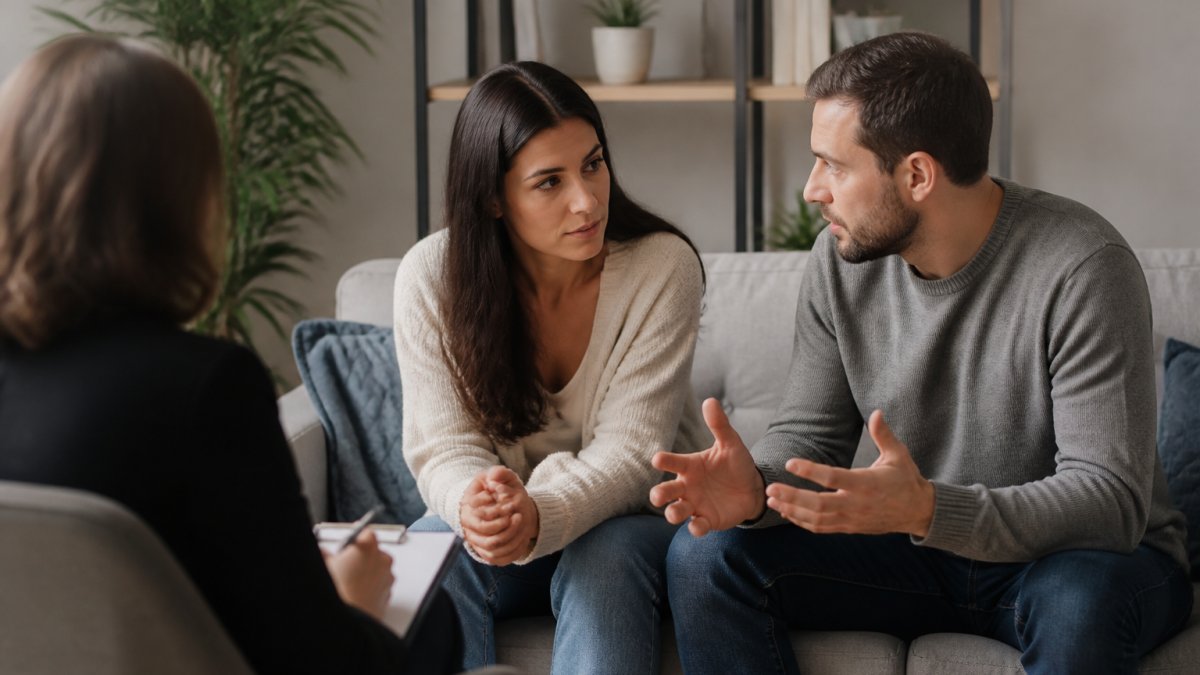
Couples counseling for communication issues helps partners understand each other's perspective and develop healthier ways to interact. A licensed therapist creates a safe space where both people can express themselves without judgment and learn new patterns together.
The therapist's role is not to take sides or tell couples what to do, but to help each partner see how their communication style affects the relationship and to teach concrete skills couples can practice in session and at home.
Common approaches in couples therapy include:
- Teaching active listening so each partner feels genuinely heard
- Helping couples identify triggers and patterns that escalate conflict
- Building empathy by exploring what lies beneath defensive reactions
- Creating structured ways to discuss difficult topics
- Developing conflict resolution strategies that work for both people
When couples learn to communicate differently, they often report feeling more connected and less frustrated. Arguments don't disappear, but they become opportunities for understanding rather than sources of pain, and partners move from "winning" to solving problems together.
The National Institute of Mental Health's guidance on relationship health emphasizes that effective communication is central to relationship wellbeing. Working with a skilled therapist accelerates this process significantly.
Couples Therapy Communication Exercises and Techniques
In therapy sessions, couples learn practical exercises to improve how they talk with each other. These techniques interrupt old patterns and create new ways of connecting.
One foundational technique is reflective listening.
Another common approach involves taking turns expressing needs without criticism.
Couples also learn to pause and de-escalate when conversations become heated. Recognizing early warning signs, raised voices, harsh language, withdrawal, gives partners a chance to take a break and return when calmer. This prevents damage that takes time to repair.
Beyond these core skills, therapists commonly introduce a small set of additional exercises, chosen to fit the couple's needs after assessment:
- Speaker-listener exchange. Partners take turns speaking for a fixed interval while the other paraphrases before responding, building the habit of understanding first.
- The "I" statement formula. Naming the situation, the feeling, and the need in sequence, which keeps the focus on impact rather than character.
- Scheduled check-ins. A brief, regular conversation (for example, fifteen minutes weekly) set aside for minor concerns, so small issues do not accumulate into large ones.
- Appreciation rounds. Each partner names specific things the other did that mattered, which counterbalances the negative bias that builds during conflict.
- Repair attempts. Practicing small gestures, a touch, a joke, a soft phrase, that signal connection during disagreement and interrupt escalation.
Research from the Journal of Marital and Family Therapy on couples communication interventions documents that structured communication exercises produce measurable improvements in relationship satisfaction when practiced consistently.
Exercises practiced in session are most effective when couples commit to using them at home.
Therapists introduce specific exercises one at a time, with each technique building a foundation for the next.
| Exercise | Primary Purpose | How It Works |
|---|---|---|
| Reflective listening | Ensure accurate understanding | One partner speaks; the other paraphrases before responding |
| Speaker-listener exchange | Build equal airtime and understanding | Partners take turns speaking for a fixed interval while the other paraphrases |
| I statement formula | Shift focus from blame to impact | Name the situation, feeling, and need in sequence |
| Scheduled check-ins | Prevent small issues from accumulating | Brief regular conversation, for example fifteen minutes weekly |
| Appreciation rounds | Counterbalance negative bias | Each partner names specific things the other did that mattered |
| Repair attempts | Interrupt escalation during disagreement | Practice small gestures like touch, humor, or soft phrases that signal connection |
| Pause and de-escalate | Prevent damage during heated moments | Recognize warning signs and take a break, typically twenty to thirty minutes, before resuming |
How to Communicate With Your Partner Without Fighting
Learning to communicate with your partner without fighting doesn't mean avoiding disagreement. It means addressing conflict in ways that preserve connection and move toward resolution.
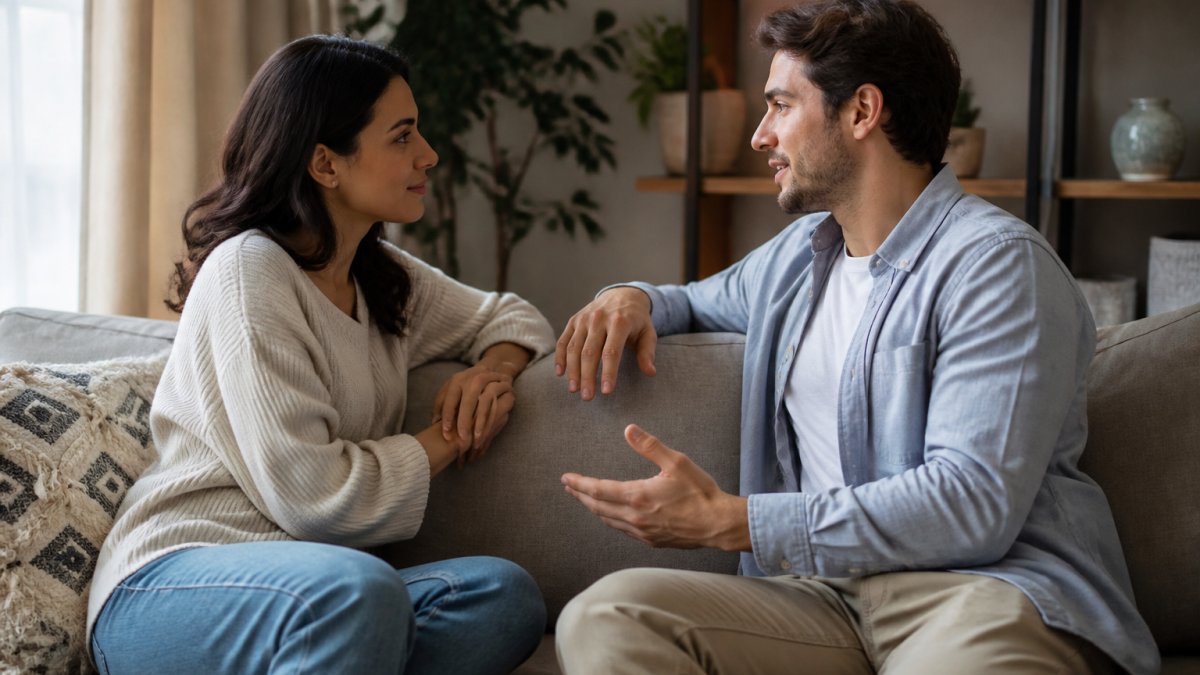
Start by choosing the right time and place. Difficult conversations rarely go well when either partner is tired, hungry, or stressed about something else. A calm moment when you can focus on each other creates better conditions for being heard.
Use "I" statements to express how something affects you rather than attacking your partner's character.
Listen to understand, not to win.
Avoid absolute language like "always" and "never." These words feel unfair and put people on guard. Instead, be specific: "When you cancel plans last minute, I feel anxious about where I stand with you."
If a conversation is becoming heated, it's okay to pause. Say something like, "I care about this conversation and about you.
Using Communication Scripts for Couples
Many couples find a framework helpful for starting difficult conversations. A script provides structure when emotions run high and it's hard to find the right words.
Here's a basic structure for initiating a conversation about something that's bothering you:
- Choose a calm moment. "I'd like to talk about something that's been on my mind. Do you have time now?"
- State your feeling, not an accusation. "I've been feeling distant from you lately, and I want to understand what's happening between us."
- Share your perspective without blame. "I notice we haven't had time together, and I miss that connection."
- Invite your partner's view. "I'm curious what you've been noticing. How are you feeling about us?"
- Listen without interrupting. Let your partner share their experience fully.
- Look for common ground. "It sounds like we both value our connection and want things to feel better."
- Problem-solve together. "What could we do differently that would help both of us?"
Scripts work best when they feel natural to you. Adapt the language to match how you actually talk. The goal is to create space for honest conversation, not to recite something that sounds robotic.
When couples practice a structured approach, difficult conversations often become less frightening. Knowing they have a way to start reduces the anxiety that keeps people from addressing problems.
How Long Does Couples Counseling Take
The length of couples counseling varies with what you're working on and how quickly you and your partner develop new patterns. Some couples see meaningful shifts in a few months; others work longer to address deeper patterns or more complex issues.
Many couples find regular sessions, typically once a week, work well for building momentum. Consistency matters more than intensity: weekly contact gives you time to practice new skills at home and return to discuss what's working.
Because timelines are uncertain, it helps to know what progress actually looks like. Couples often notice change in stages rather than all at once:
- Early stage (first several sessions). Conversations feel more structured. Partners begin to catch themselves mid-argument and use a pause or a repair attempt. The goal is not fewer disagreements but less damage per disagreement.
- Middle stage. Partners start to anticipate each other's perspective and bring up concerns earlier, before resentment builds. Recurring arguments shorten or lose their intensity.
- Later stage. New patterns become more automatic. Couples report feeling more connected and more able to repair after conflict without needing the therapist present.
Progress in couples counseling communication isn't always linear. You might have weeks where things feel better, then hit a rough patch; this is normal.
To gauge whether therapy is helping, couples can watch for a few practical markers: whether the same argument recurs as often, whether either partner withdraws less, whether difficult topics get raised sooner, and whether repair after conflict happens faster.
Starting Your Counseling Journey
Beginning couples counseling for communication issues is a significant step. It signals that both partners care enough about the relationship to invest time and effort in improving it.
When you reach out to schedule an appointment, be prepared to describe what's been challenging in your relationship. You don't need to have it all figured out.
In your first session, expect to spend time building rapport.
Guidelines from the American Association for Marriage and Family Therapy on choosing a therapist suggest looking for someone with specific training in couples work and experience with the issues you're facing.
Signs You Need Couples Counseling can help you recognize whether professional support is right for your relationship.
What to Expect in First Couples Counseling Session provides more detail about what happens when you arrive for your appointment.
If you're ready to work on your relationship, Make An Appointment to speak with one of our experienced therapists at Oak Lawn Counselors.
Frequently Asked Questions
What are common signs of communication problems in a relationship?
Communication problems often show up as frequent misunderstandings, unresolved arguments that repeat, difficulty expressing feelings without escalating, or one or both partners withdrawing and avoiding difficult conversations. You might notice you're talking past each other, making assumptions about what your partner means, or feeling unheard even when you're speaking. These patterns usually develop over time and can affect emotional connection and trust.
Can couples counseling help when conversations turn into arguments?
Yes. A therapist helps couples recognize what triggers arguments and teaches de-escalation techniques so conversations stay productive. Through couples therapy communication exercises, you learn to slow down, listen to understand rather than to respond, and express needs without blame or criticism. The goal is to break the cycle where disagreements become fights, so you can address real issues together.
How should I prepare for my first couples counseling session?
Come with an open mind and a willingness to listen. Think about specific communication challenges you want to address, but avoid rehearsing accusations or blame. Be honest with your therapist about what brought you in and what you hope will improve. Both partners showing up committed to the process, even if uncertain, matters more than having everything figured out beforehand.
What can couples do while waiting for their first appointment?
Continue to be respectful even during disagreements. Try to notice patterns in your arguments without judgment, what typically starts them, how they usually end, and how you each feel afterward. Avoid making major decisions about the relationship during this waiting period. Some couples find it helpful to agree on one small communication change, like taking a break before a conversation gets heated, to build momentum before counseling begins.
Taking the step to address communication issues in your relationship shows strength and commitment. Whether you're feeling stuck in recurring arguments, struggling to be heard, or simply wanting to deepen your connection, couples counseling for communication issues offers practical tools and professional guidance. A licensed therapist can help you and your partner understand each other more fully and build a relationship that feels more secure and fulfilling.